
Whoa! Solana moves fast. Really fast. If you blink you might miss a block. The network’s throughput is great, but it makes keeping track of activity trickier than on some older chains. For users, developers, and collectors, that gap is where the blockchain explorer steps in — your single pane to see what’s actually happening on-chain.
I use explorers every day. I’m biased, but a good explorer changes how you interact with wallets, NFTs, and DeFi. It surfaces the raw facts: transaction flows, token mints, marketplace activity, and the subtle things that wallets don’t show you. That’s useful whether you’re debugging a program, verifying a trade, or tracking an NFT collection’s health.
First, a quick practical note for folks who just want speed and clarity: start with transaction IDs and program logs. Short IDs are neat for sharing. Longer logs are where the story lives. Seriously? Yep — sometimes the memos and inner instructions explain why a transaction failed, or why a swap paid so much slippage.
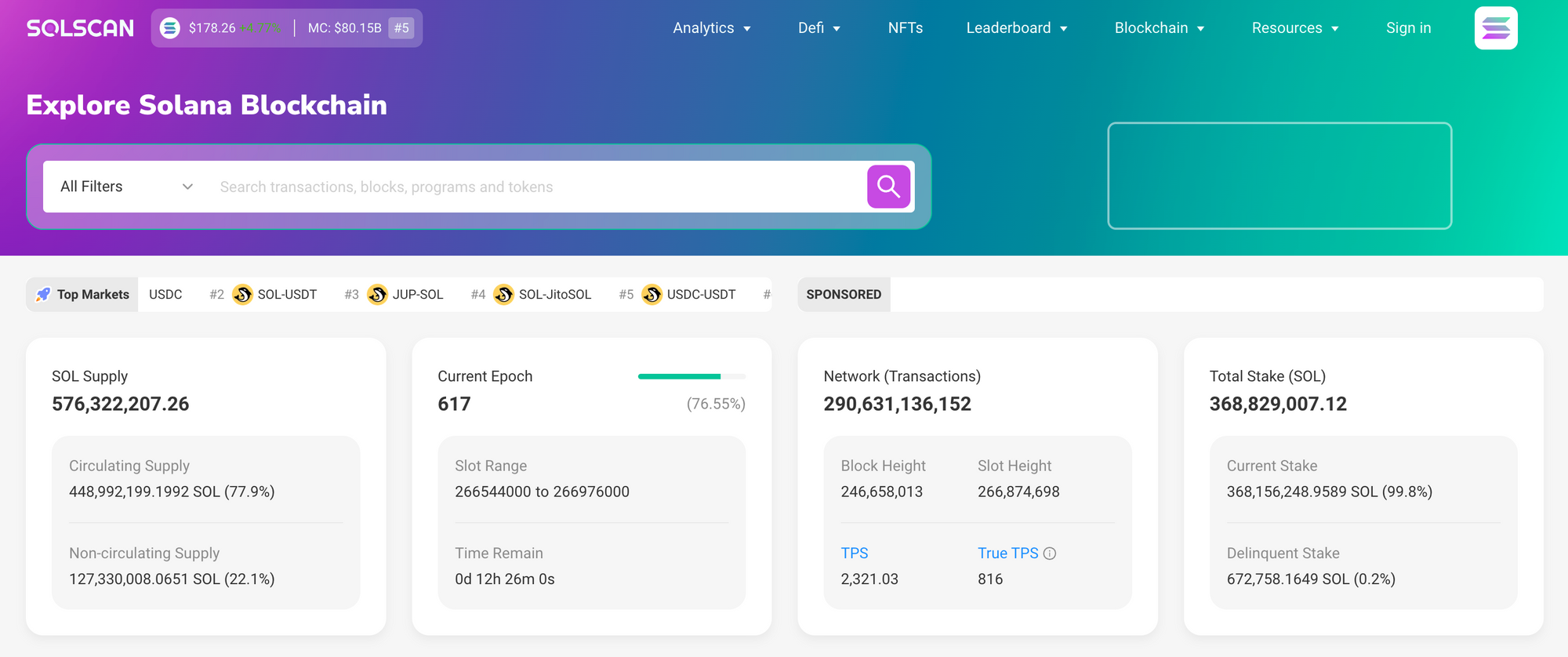
How to read SOL transactions like a pro (fast checklist)
Okay, so check this out—when you open a transaction page, here are the essentials, in order of usefulness:
- Timestamp and block: confirms when and in which block the tx occurred.
- Signatures and fee payer: shows who signed and who paid for the gas.
- Instruction list: the sequence of program calls (this tells you which contracts were hit).
- Pre/ post balances: handy for quick balance diffs without recomputing everything.
- Logs and inner instructions: these are the why and the how; they show return values and nested program calls.
Short wins are nice. Longer reads will save you time later. And if something looks off — like a tiny fee but huge balance changes — read the logs. They often reveal wrapped SOL moves or cross-program invocations that were not obvious at first glance.
Pro tip: watch fee-payer accounts on tokens that frequently move. If you see the same fee-payer across many failed or suspicious transactions, that’s a sticky trail to follow. It’s simple, but effective.
NFT tracker essentials — what actually matters
If you’re tracking NFTs, stop obsessing over floor price only. Yep, the floor matters, but on-chain indicators tell the rest of the tale. Look at: mint activity, holder concentration, recent transfers, program IDs for royalties, and marketplace contracts used.
Here’s what I check quickly for an NFT drop:
- Mint pattern: Was it a one-shot mint or multiple mints? Did the supply match the contract?
- Holder distribution: Are 10 wallets holding 90%? That’s a red flag.
- Secondary market behavior: Are transfers to marketplaces frequent or are most tokens moving peer-to-peer?
- Royalty enforcement: Which programs are used for sales? Some marketplaces respect on-chain royalties; some don’t.
Something bugs me when explorers hide mint details. It’s basic info. (oh, and by the way… a clean UI that shows mint and collection metadata upfront will save you from dumb mistakes.)
Solana analytics — metrics that matter
Analytics can be overwhelming. Dashboards love metrics. But here are the ones I trust most:
- Active addresses per day — indicates real network usage, not just airdrops or bots.
- Value locked and token flows — shows economic activity around DeFi protocols.
- Transaction composition — what percentage are swaps vs transfers vs program interactions.
- Failed transaction rate — high rates can mean congestion or buggy programs.
On one hand, raw throughput looks great for Solana. On the other hand, failed txs or weird memos show operational pain points. Both are true at once. Use both hard counts and qualitative checks — for example, inspect a sample of failed txs to see if they’re due to nonce issues, insufficient lamports, or something else.
For many everyday tasks — like confirming receipts or monitoring marketplaces — a reliable explorer with logs and analytics dashboards is invaluable. If you want a starting point, try the explorer linked below. It’s a practical gateway to transaction details, NFT tracking, and protocol-level analytics that I use regularly.
Where to go next
For a straightforward place to inspect transactions, track NFTs, and dig into analytics, check this official resource: https://sites.google.com/cryptowalletextensionus.com/solscan-explorer-official-site/. It’s not the only option, but it’s a usable mix of transaction detail and explorer features that help surface the important stuff fast.
One more note — wallets will simplify things, and that’s great for daily use. But when you need the truth, the chain has it. The explorer is where you cross-check, validate, and sometimes discover transactions that the wallet UI hides. My instinct says: always cross reference, especially before big trades.
FAQ
How do I verify an NFT mint?
Look at the mint transaction and the program ID used. Confirm the metadata account was written in the same tx and that the collection verified flag (if present) points to the expected collection mint. If multiple instructions appear, check the inner logs for each step.
Why did my transaction fail but still cost a fee?
Failed transactions still consume compute and therefore fees. Inspect the logs to see the failure point — often it’s insufficient account balance, an assertion in the program, or an unmet prerequisite in a cross-program call.
Can I track token flow across wallets?
Yes. Follow the token account movements and watch for transfers to marketplaces or to intermediary custodial wallets. Look at pre/post balances and the sequence of instructions to reconstruct the flow.
Decentralized token swap protocol for liquidity providers – the official site – Earn fees and trade tokens with low slippage.